

Choosing the right multi-hulled vessel often feels overwhelming because of the passionate arguments surrounding both three-hulled and two-hulled designs. While both offer significant stability advantages over traditional monohulls, the choice ultimately depends on your specific boating goals, budget, and desire for speed versus space. Let’s break down the design differences and explore the pros, cons, and uses of trimarans vs. catamarans to help you make an informed decision for your next maritime adventure.
Understanding the Structural Differences
The most obvious difference between these two vessels is the number of hulls, but their engineering goes much deeper than that. A trimaran features a main central hull, known as the vaka, which provides the primary buoyancy and houses the main living or cargo areas. Two smaller outrigger hulls, called amas, flank this central hull. Connected by crossbeams or aka, these outriggers provide stability and prevent the boat from capsizing. The design creates a wide footprint on the water, yet the actual surface area touching the water remains relatively low, reducing drag.
Power catamarans take a different approach to stability and displacement. They utilize two parallel hulls of equal size, connected by a bridge deck. This structure creates a massive rectangular platform that sits atop the water. Unlike the trimaran, where the center hull does the heavy lifting, the catamaran distributes weight evenly across both hulls. Builders often construct these vessels using fiberglass, carbon fiber, or aluminum to ensure the bridge deck remains rigid enough to withstand the twisting forces of the ocean.
The Performance and Stability of Trimarans
Boating enthusiasts often champion the trimaran for its exceptional performance in rough water. The center hull slices through waves rather than riding over them, while the outriggers provide a righting moment that keeps the vessel surprisingly flat. This design reduces the uncomfortable rolling motion found in monohulls. When moving at speed, a trimaran generates minimal wake, which speaks to its efficiency. The narrow shape of the main hull allows for higher speeds with less horsepower, making it an exciting option for thrill-seekers.
However, the design does present challenges. The extreme width required for the outriggers makes docking a significant headache. Finding a slip that accommodates a trimaran often requires paying for end-ties or specialized catamaran slips, which drives up ongoing costs. Furthermore, the interior volume usually suffers. Because the living quarters sit almost exclusively within the narrow central hull, the cabin feels more like a monohull or sailboat. You lose the sprawling, open-concept layout that many boaters desire.
The Advantages of Power Catamarans
Power catamarans have surged in popularity because they solve the space problem inherent in other designs. The bridge deck connecting the two hulls creates a vast, single-level living area. This layout allows for a wide salon, a spacious galley, and large cockpits perfect for fishing or lounging. The separation of the hulls also provides excellent privacy, as cabins often sit in opposite hulls. For stability at anchor, the power catamaran is king. It sits firmly on the water, providing a steady platform that families and guests appreciate, especially those prone to seasickness.
Engine redundancy is another major benefit for the power catamaran owner. With an engine located in each hull, you gain peace of mind knowing that if one fails, the other can bring you home. The widely spaced propellers also make maneuvering in tight quarters incredibly easy. You can spin a catamaran within its own length by putting one engine in forward and the other in reverse, eliminating the docking anxiety caused by the trimaran’s width.
Limitations of the Twin Hull Design
Despite their popularity, catamarans are not without flaws. One specific issue involves the bridge deck clearance. If the waves are high and the bridge deck sits too low, water can strike the bottom of the structure. This phenomenon, known as slamming, creates noise and shuddering vibrations throughout the boat. Additionally, while catamarans are stable, they can have a quick, snappy roll in beam seas, which some seasoned sailors find more tiring than the smoother motion of trimarans or monohulls.
Construction costs also tend to be higher for catamarans. You are essentially building two boats and connecting them, which requires more material and more complex engineering to ensure structural integrity. This double-hull requirement means two engines, two drivetrains, and often duplicate systems for plumbing and electrical, which inevitably leads to higher maintenance costs over the lifespan of the vessel.
Primary Uses for Trimarans
Given their design characteristics, trimarans excel in specific environments. They dominate the racing scene and the world of high-performance cruising. If your goal involves covering long distances quickly and efficiency is your top priority, the trimaran serves you well.
Solo sailors often choose them for their stability, which doesn’t demand constant attention, while still delivering the thrill of speed. They are less common in the recreational charter market simply because they lack the hotel-like accommodation space that vacationers usually demand.
Where Power Catamarans Shine
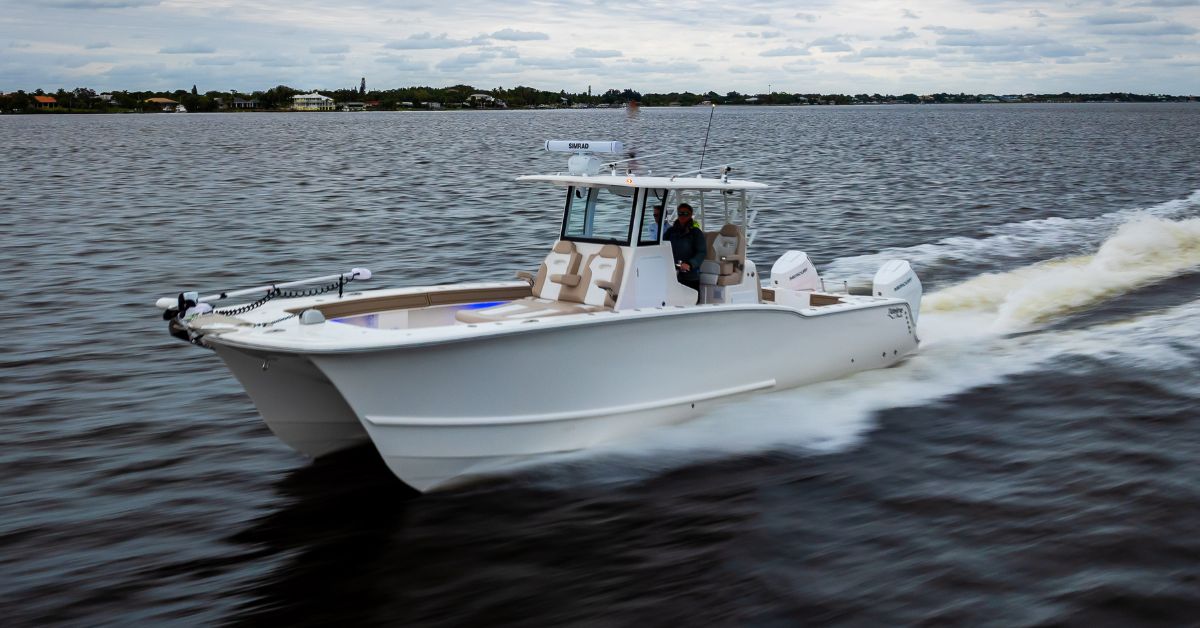
Power catamarans have found their home as the ultimate multi-purpose vessels. They are the preferred choice for charter companies, family cruisers, and serious offshore anglers. The stability provides a steady gunwale for reeling in large fish, while the massive deck space allows for ample rod storage, bait wells, and coolers.
For long-term cruising or “van life” on the water, the catamaran offers a living environment that feels more like a condo than a boat. The shallow draft lets captains explore skinny waters and anchor near the shore, accessing cruising areas that deep-keel boats can’t reach.
Choosing the Right Vessel for You
Deciding between these two designs requires an honest assessment of how you intend to spend your time on the water. If the thrill of speed and cutting through choppy seas with surgical precision motivates you, the trimaran offers a driving experience that is hard to match. It connects you to the water and rewards active engagement. However, if your priority shifts toward comfort, social space, and a stable platform for activities like fishing or diving, the power catamaran is the superior choice.
We have explored the pros, cons, and uses of trimarans vs. catamarans to clarify the distinct personalities of these multi-hulled boats. For those who value the stability of a catamaran but demand a vessel built with serious craftsmanship and performance in mind, there are specialized options available. Tideline Boats has mastered catamaran fishing boats, creating high-performance vessels that combine a multi-hull’s smooth ride with the finish and fishability top-tier anglers require. When you are ready to experience the advantages of a premium twin-hull design, a test ride on a Tideline will show you exactly what you have been missing.
