

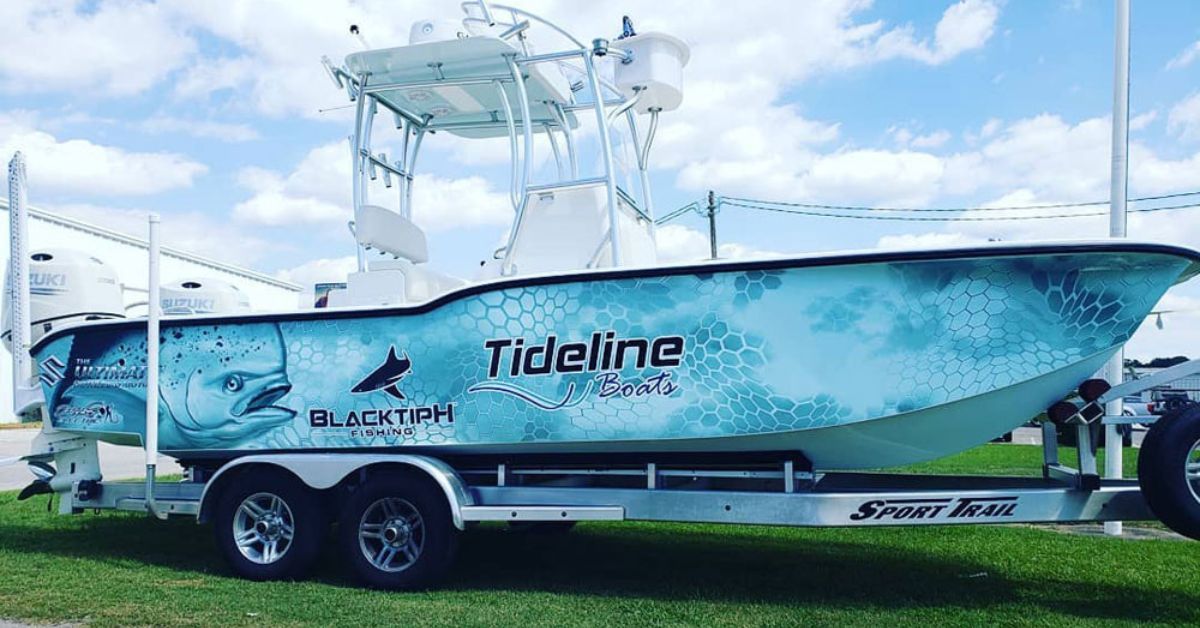
Deciding on the right propulsion system for a new boat often feels like balancing a complicated equation of speed, efficiency, cost, and style. The modern marine market offers more choices than ever before, but the debate often centers on the configuration of outboard motors.
While single engines suffice for smaller crafts and triple engines offer a middle ground, the most heated discussions usually revolve around twin vs. quad boat engines. Each setup brings a distinct set of capabilities and aesthetic appeals to the transom, making the choice heavily dependent on how a boater plans to use their vessel. Let’s break down the nuances of both configurations to help prospective buyers navigate these choppy waters.
Understanding Twin Engines
Advantages
A twin-engine setup involves mounting two outboard motors side-by-side on the boat’s transom. This configuration has long been the gold standard for offshore fishing boats and larger center consoles because it offers a practical balance of power and security. The primary appeal for many captains is redundancy. If one engine fails miles from the coast, the second engine can typically limp the boat home, providing a crucial safety net that single-engine vessels simply cannot match.
Beyond safety, twin engines significantly improve maneuverability, especially in tight quarters like marinas or docking stations. By putting one engine in forward gear and the other in reverse, a captain can spin the boat on its axis, making docking in wind or current much less stressful. Aesthetically, a pair of engines looks balanced and purposeful without dominating the entire rear profile of the boat.
Disadvantages
However, twin engines do come with drawbacks compared to a single motor. The initial purchase price is higher, as is the cost of rigging. Maintenance requirements effectively double, as there are two oil changes, two lower unit services, and two water pumps to replace. Despite the added costs, upgrading from a single to twin outboards remains popular for the improved control and peace of mind it provides.
Understanding Quad Engines
Advantages
Quad engines are the pinnacle of modern outboard power, featuring four motors mounted across the transom. Boat designers typically reserve this setup for large, high-performance center consoles exceeding forty feet in length. The visual impact of four massive cowlings lined up is undeniable; it signals serious power and typically accompanies a hull designed for aggressive performance.
The primary advantage of a quad setup is raw, unadulterated power. For large vessels carrying fuel, ice, gear, and crew, four engines deliver the thrust needed to plane quickly and maintain high cruising speeds that would strain twin or triple setups. Speed is another major factor, as quad-engine boats can reach speeds smaller configurations can’t, making them ideal for tournament anglers who need to get to distant fishing grounds first.
Disadvantages
The downsides of running quads are substantial and mostly financial. The fuel consumption at wide-open throttle is immense, often requiring massive fuel tanks to ensure adequate range. Maintenance costs are quadruple that of a single engine, and the complexity of rigging four engines means that troubleshooting electrical or mechanical issues can be time-consuming. Furthermore, the sheer weight of four outboards requires a hull specifically designed to support that mass without compromising stability or draft.
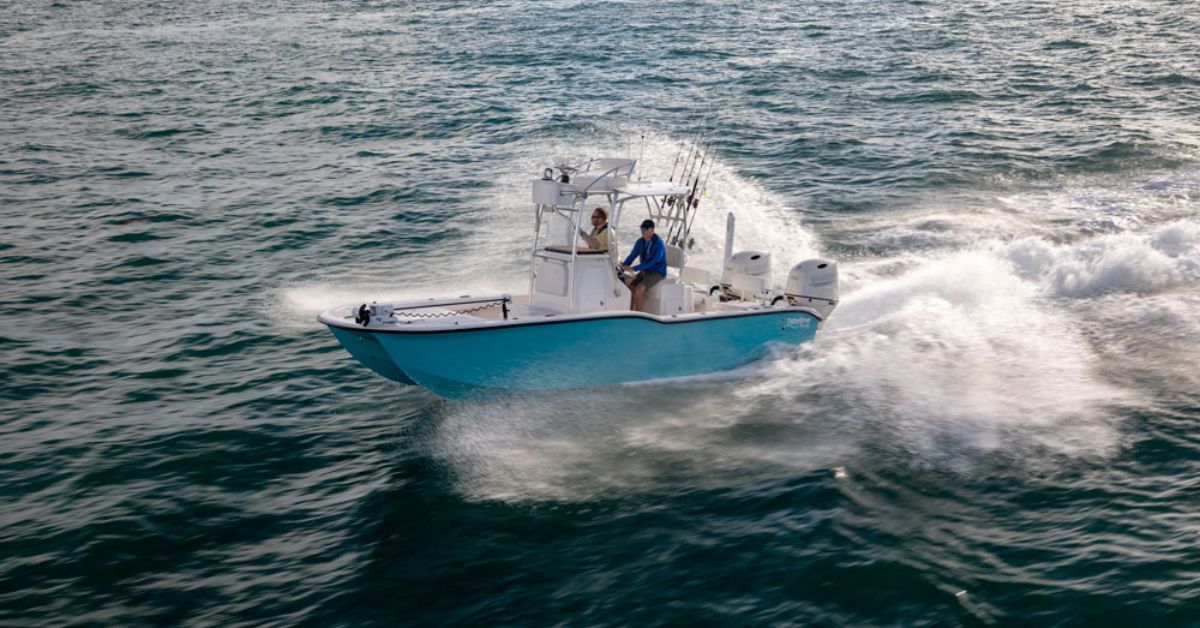
Performance Comparison
Speed and Acceleration
When analyzing speed and acceleration, quad engines naturally take the lead on larger hulls. They provide the torque needed to lift heavy boats out of the hole and propel them to eye-watering top speeds. However, twin engines can often perform more efficiently on a smaller or lighter hull. A boat overpowered with quads might not see a proportional speed increase compared to the added weight and drag of two extra lower units in the water.
Handling
Handling varies significantly between the two. Twin engines offer agile, responsive handling that feels sporty and manageable for most operators. Quad engines, while powerful, add significant weight to the stern. This can affect the boat’s center of gravity and how it rides in rough seas. Modern joystick piloting systems have leveled the playing field somewhat, making docking a forty-foot boat with quads surprisingly easy, but the physical dynamics of the hull in motion remain different.
Fuel Efficiency
Fuel efficiency is rarely the primary concern for someone buying a quad-engine boat, but it is worth noting the difference. At trolling speeds or idle, the difference might be negligible, but at cruising speeds, four engines will almost always drink more fuel than two. However, a twin-engine boat pushed to its limit might be less fuel-efficient than a quad-engine setup that cruises effortlessly at the same speed.
Maintenance and Reliability
Maintenance is a game of numbers. With twin engines, a boat owner tracks two maintenance schedules. With quads, that workload doubles again. This involves more spark plugs, more gallons of oil, and more filters. The time the boat spends out of the water for service increases, which can cut into the boating season.
Reliability is a nuanced topic. While having four engines suggests more redundancy, it also introduces more potential failure points. A single electrical fault in a complex rigging system could potentially affect multiple engines. Conversely, losing one engine in a quad setup is less detrimental to performance than losing one in a twin setup. A quad-engine boat planes and runs fast on three engines, while a twin-engine boat running on one usually stays limited to displacement speeds.
Cost Analysis
The initial investment gap between twin and quad engines is stark. Adding two more engines can add nearly six figures to the price tag of a new boat, not including the stronger transom and rigging required to support them. For many boaters, twins offer the sweet spot of performance per dollar.
Running costs follow a similar trajectory. Insurance premiums for quad-engine boats are significantly higher due to the replacement value of the motors and the high-performance nature of the vessels. Fuel bills will be larger, and even dockage might cost more if the boat requires a larger slip to accommodate the wider beam often associated with quad-ready hulls.
Finding the Right Balance
Choosing between twin vs. quad boat engines ultimately comes down to defining the mission of the vessel. For most coastal and offshore anglers, a twin-engine setup provides the perfect blend of reliability, economy, and performance. It is a proven configuration that handles most sea conditions with grace. Quad engines are specialized tools for specific jobs, such as hauling heavy loads at high speeds over long distances. They are for the boater who demands the absolute maximum in performance and presence, regardless of the cost.
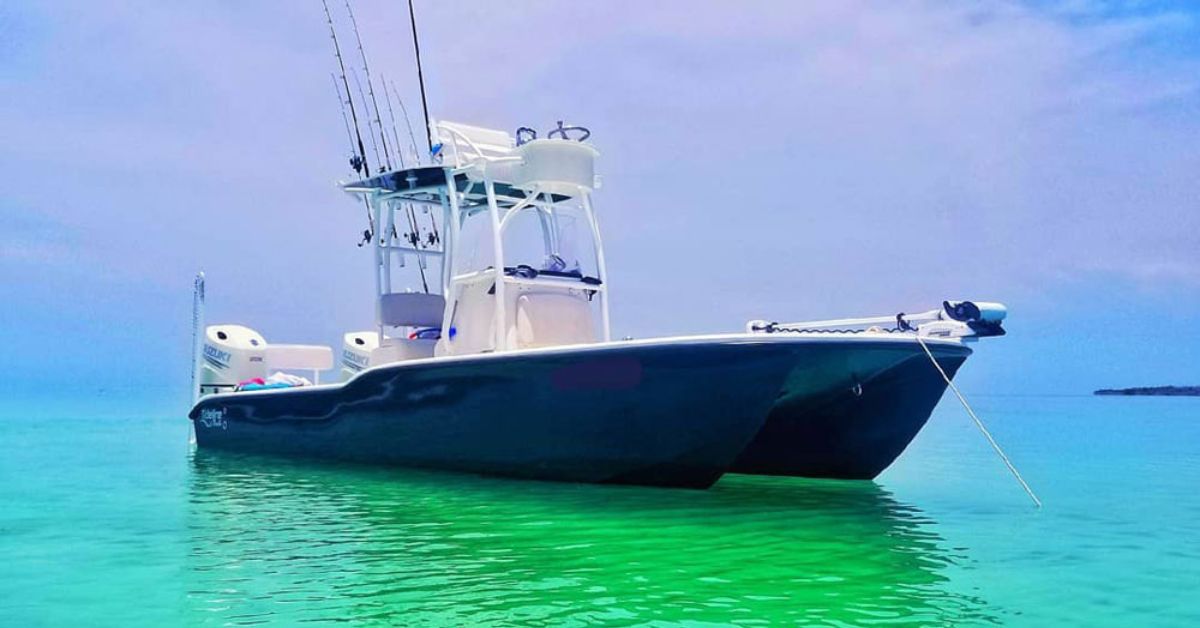
For those seeking a versatile vessel that balances these demands intelligently, Tideline Boats offer compelling solutions. Our twin-engine Tideline 235 is a prime example of a true hybrid, designed to do anything a bay boat can do while remaining fully offshore capable. Coastal boats like the Tideline 235 feature efficient hull design and high-performance catamaran stability. This allows them to maximize their power, proving smart engineering is just as important as the number of engines. Schedule a sea trial today to learn more.
